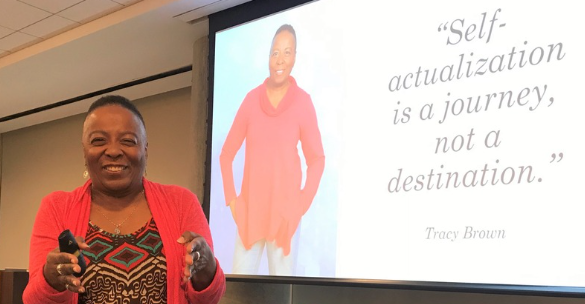
At her core, Tracy Brown is a perspective shifter. She helps people change their perspectives on the importance of diversity and inclusion in all rooms by helping them understand this behavior as a long-term strategic advantage, not a short-term tactical play. Before building a broad portfolio of corporate clients, Tracy was a respected human resources executive equipped with a rich understanding of what motivates humans to do what they do. With keen leadership instincts, native curiosity about the human condition, and a life framed by spiritual principles, Tracy struck out on her own and hasn’t looked back. And, somehow, along the way she authored 7 workplace focused books and she isn’t finished yet.
Tracy Brown, first of all, thank you so much for being In the Cut. I feel honored to have you with me. I have known you from a distance for a long time and to be able to know you intimately is a real gift and joy.
Oh, let’s have some fun.
I like to start out with a question that is important to how we show up in the world and how we think about ourselves as we show up in the world. So, I would love to hear how you identify.
That is such an interesting question that can be answered in so many different ways. But rather than overthink it, I’m going to go with what actually comes up first. I identify myself as someone who is spiritual, inclusive and addicted to roller skating. Then in a more serious environment, if we look at demographic kinds of things, I identify myself as a Black woman who is unapologetically inclusive.
Sheila: We’re gonna go off script right out of the gate!
Talk about the need to be unapologetically inclusive.
Unapologetically inclusive is so important, it seems, because I meet people all the time who are apologizing because they believe that everyone should be included or treated with respect. Or, they are attracted to that phrasing because they are like me – there is no reason to apologize for it. I am inclusive. I don’t have to be ashamed of it. I won’t be shamed by it. And it is an important part of who I am and how I show up in the world.
In this current environment where there is so much polarization based on race, gender identity, age or even physical ability – no I’m not playing that game. Unapologetically, I am doing things and showing up in a way that encourages people to get to know and respect each other and work well together.
Sheila: We are going to come back to inclusive because you used it in both definitions of yourself and I know that it shows up in other places. I’m going to let it come back to us organically.
“Inclusion is important because if you cannot be inclusive, if you cannot work well with people who are not like you, you can’t be a good leader.”
I know you from so many different angles. How do you describe this interconnected, spatial work that you do?
Saying what is the work that I do is easy in the sense that it’s also my purpose. The answer to those two questions is almost identical.
The work that I do is to engage with leaders and organizations so that they can strategically get the most from the people who work with them; and/or give the best service to the people they serve. In that regard, inclusion is important because if you cannot be inclusive, if you cannot work well with people who are not like you, you can’t be a good leader. You can’t provide good customer service. You cannot have a strong team
When I started my business, the subtitle was maximizing human resources. The 3 things I marketed were leadership development, team building and customer service. I always included a segment in the work that I did, whether it was strategy or skill-building, “Hey by the way, in this century you must be able to communicate with, or lead or serve a multi-ethnic, multi-cultural, multi-generational target audience.” I always included that and it was the marketplace that started referring to me as a diversity consultant; or as an expert on diversity and inclusion. After 10 years, I changed the name of my company to include that because that was how I was known.
Whether I am working with a spiritual community around engaging the maximum number of people, teaching or offering what they provide in alignment with their mission, or a Fortune 100 company, it’s really the same thing. What is your mission? Who are you trying to reach? How are you going to get people to either hear that message or buy your product? How are you going to get people in your organization to work well together?
For me, you can’t do any of that if you’re not inclusive in a strategic way.
Sheila: I’m curious to know, over the years, what you find to be the major resistors to being an inclusive leader?
Major resistor number one is that it’s not my problem. I’m not part of the problem. It doesn’t have anything to do with me. That’s those other people. Major resistor number one is lack of self-awareness.
Major resistor number two is limited understanding and knowledge of what it means to be inclusive. When people hear the word diversity, even in the 21st century, the majority of people still think about racism. Mostly they think about racial dissention between Black and white. There is such a low level of understanding that when I say diversity I am talking about all the ways we are different from one another both genetically and culturally. When I say inclusion, I am talking about the ways we need to behave in order to create an environment where people are valued and respected. When I say diversity and inclusion, I mean pay attention to people because we want them to work together for a common goal.
If I work for a municipality in the library system, I am working to provide educational materials to people in our community. If there are large groups of people in the demographic of our community who are of Asian descent, even though they’ve been in the United States a long time, they have a specific cultural background. And I may also have a large demographic that are of Mexican descent and they, too, have a specific cultural background.
To be successful, I need to understand some things culturally about those 2 demographic populations because they are very different from me. In order to know what books I want to order. Or, how to engage and attract them to come to events and programs that we are hosting. And what holidays I might want to integrate into the course of the year. All of those things are related to who my customer is and how I want to build trust and relationship with them.
Sheila: We could spend all day talking about resisters because down the list is fear, anger and all kinds of things that keep one from even asking the question of what is it that you all would need to have to feel included. It’s the sense of I must know, I should know that! But, why would I know that? How would I know that?
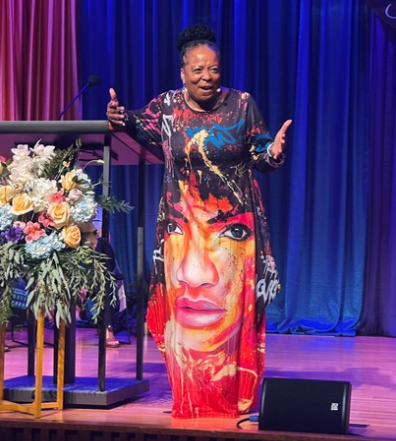
I want to talk specifically about you as a leader of leaders. Your clientele are leaders in all types of different situations and you’re called upon to help them be better leaders. When did you know that you could even call yourself a leader? When was your first known leadership moment and what sticks out to you about that?
Two examples come to mind immediately.
The first one is when I was in high school. I was a cheerleader and elected by my fellow cheerleaders to be the captain. For me, that was really a point where I was like, “Oh, I am a leader and I’m seen by others as a leader.” One of the reasons it stands out for me is because I started high school young. I was 2 to 3 years younger than the other cheerleaders on the varsity squad. The facts were that I was younger, in my junior year with seniors on the squad, and I did not ask to be the captain. I didn’t have a conscious desire. I was willing to do it, but I didn’t suggest it to anyone. I didn’t even think it was a possibility and that was when I understood that I was doing all the things that good leaders do and other people saw that.
As you ask the question, there is another part that is not just whispering, it is demanding me to say it… it wasn’t a leadership moment. The cheerleader story is a leadership moment. But, when did I know I was a leader? Probably at age 4 or 5 because there were all of these adults around me who over and over and over again would say, “Whatever you do, you be a leader.” It wasn’t the leader, like better than everyone else. It was, if you walk to school, you do so with leadership in mind. You do the right thing. You’re respectful of people. You take what’s going on and make it make sense.
I can’t count the thousands of times when adults in the church I grew up in, aunts, uncles and older cousins would speak the expectation that I was a leader. They would say, “You are smart and you are supposed to make a contribution anywhere you go and in everything you do because that’s what leaders do. And it wasn’t a message of power over others. Leadership was not taught to me as I’m the leader and I’m in charge with power over others who will do what I say. That is not the message I got about leadership.
Leadership was about contribution. I would be a leader when I contributed to the success of the whole in a meaningful way. I would be a leader when I could stay calm in chaos and look for the solution, rather than staying stuck in the problem.
I don’t think I’ve actually ever articulated that before this moment.
Sheila: That’s what happens In the Cut. Thank you!
There appears to be in that child of 4 or 5, an expectation or a requirement. You had voices that poured into you in a way that expressed who you were.
I don’t think it can go without saying that the context of what makes that so impactful is growing up as a young Black person in a society where there are a lot of stereotypes and limitations placed upon you as a person who is Black. Being groomed to see oneself as a leader - and accept that responsibility - was a self-esteem builder. It also taught me to live remembering no one is better than anyone else, even if they think they are.
Sheila: How good it is to see the evolution of how that gets expressed as a person who is unapologetically inclusive.
“Inclusion is important because if you cannot be inclusive, if you cannot work well with people who are not like you, you can’t be a good leader.”
When you think of your leadership style, what does your identity call out of you? What does it require of you in leadership?
I’m smiling because of the three adjectives that initially came to mind when you asked the question – spiritual, inclusive and roller skating! I think that it is my spiritual grounding and belief system of treating everyone with respect that shows up in me as a leader because I’m not really impressed very much by titles. As a leader, I am looking for what the unique things are about each of the people I’m working with because they, too, are a child of God. They, too, have been created to do something unique in the world. That results in me being curious and consciously inclusive.
When I think of inclusive in my identity, I think about how I, as a leader, tap into the strengths of each person to move toward a common goal. I need to know about them in order to do that.
This may sound hilarious, but being addicted to roller skating… oh, my goodness! The leadership lessons I have learned from roller skating. Like moving in and out of the chaos without ignoring it. Understanding that there are times to just turn around and skate backwards! The whole idea of showing up to do something wholesome and fun, I feel a lot of that for me has been learned from roller skating. I don’t know every individual person and I am not trying to be social friends with every person. Being a part of an environment where people are enjoying themselves is the feeling that I’m trying to create. What I realize is that feeling for me is how it feels when I’m at the skating rink.
Sheila: There’s a rhythm to roller skating and you almost answered my question. What does it feel like when you’re in the rhythm of leadership?
Yes, again, not that I ever thought about that before. You’re right, it is the rhythm of being in the roller-skating rink with a lot of people who individually are doing their own thing. They come together on one song because they’re doing the same step and 2 songs from now, they are skating with another group doing a different dance or step. There’s constant movement. There’s no standing still. And even though it looks like you’re going in the same circle over and over and over, every time you go around the corner, it’s different because there are different people next to you or the music has changed. It’s not the exact same thing.
Then, when it’s time to take the skates off and go home there’s like a, “Yeah, that was good! My body and my mind got to engage.” It’s like, “Yes!”
Sheila: Yes, There are words like fluid formation and if you close your eyes and actually think about leadership, there’s a fluidity. There’s a baseline of it being and then there’s all this stuff that makes it work no matter who’s in the room or who’s showing up.
And not to forget, that no matter how great a roller skater you are, you are going to fall. Someone will unintentionally kick your skates out from under you. Or, you’re skating at full speed and somebody gets in the way and to keep from knocking them down, you fall. There are always reasons to fall. But no matter how great of a skater you are, you can’t say that you will never fall. Sometimes you’re trying something new and it’s your fault. Sometimes it’s not your fault. Either way you have to get up and keep going. And that is a leadership lesson for sure.
Sheila: I see some merchandise with roller skating and leadership!
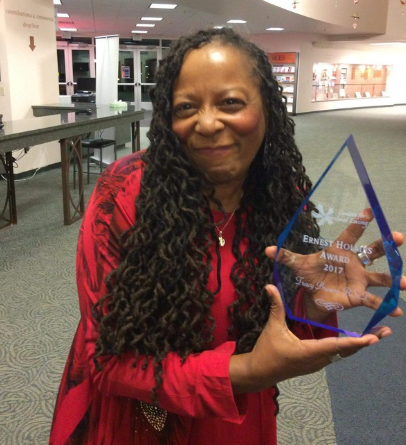
Describe a Tracy leadership moment, like maybe a fall. Or maybe it’s something great. What is one that sticks out in your mind as a real “aha!”
There are so many of them and I have to admit that this is one question that I was a little overwhelmed with because so many examples came to mind. I said, “I’m not going to think about it until she asks me!”
Sheila: I’m loving this In the Cut conversation!
I am, too! That’s partly why I love talking with you because we have great conversations.
When I was pretty early in my career, I received a lot of positive feedback. As a result, I received a series of promotions within a four-to-five-year period. As a young leader, I believed it was all about the results. Yes, I was leading people and I needed to get results through people, and encourage them and provide training and motivation and all of that.
I was a good, although young, leader.
And then I learned that it can all be taken away from you, no matter how good you are, by one person. One person who has power or authority. It could be that they don’t like you. Or, you’re a member of a demographic category. Or, it could be based on the fact that they have a cousin who they want to have that job. It might not be about you at all.
The reason this is coming to mind as a leadership learning moment is that it taught me several things. It taught me to always do my best, do a good job, so that no matter what happened I would be proud of the work I did. There were internal references and standards that were at least as important, and for me more important, than whether there was external validation. That was a really important learning for me in the first ten years of my career.
Another thing I learned from that was a relearning of what I had been taught as a young Black child. There will be people who don’t like you and it has nothing to do with you personally. They don’t like you because of the color of your skin. They don’t like you because you are a woman in a male dominated industry. They don’t like you because you are not trained in healthcare and you’re in a healthcare organization. People may have a negative bias that you can’t control or change.
I learned that young. That was the whole learning about building self-esteem and knowing who you are. But I had to learn it from a career perspective to balance out the idea that if I just work hard enough, I’ll get the next promotion or salary increase. As a leader, no, that doesn’t always happen.
Sheila: Correct. And your first one of always doing your best. Operating with integrity. You can be proud of what you did in spite of the circumstance that led to whatever. You always know that you did the thing that those elders expected of you when you were four years old.
Those elders and ancestors sit on my shoulders and whisper in my ear all the time.
What surprises you about leadership, or, ever surprised you about leadership?
The first thing that comes to mind is just like when I was elected to be the captain of the varsity cheerleaders, for decades it would always surprise me when people saw me as the leader they wanted to follow.
Sheila: Why?
Well not so much now, but for decades, it would surprise me that while I would be quietly doing my work, asking questions, making suggestions or creating additional resources, people wanted to follow me or be on my team. They would tell me reasons why they perceived me as the leader they wanted to elect, or hire or work for. It would always surprise me.
And as I’m saying this, what I’m realizing is that it surprised me because it took me decades to really realize that everybody doesn’t lead in that way. I was just showing up being me and I assumed that, if I know that this is what it means to be a good leader, that everybody knows this. I assumed there are dozens of good leaders; hundreds, thousands of people who are perceived as being good leaders. And now I clearly understand that’s not true.
That’s been the biggest surprise. Every time I’ve been elected to be a leader in a professional association, or lead a project for a client that was small at the beginning and was added to over time, inside, I was usually a little surprised.
Sheila: You know we always say, “We’re the ones we’ve been waiting for.” And then when you realize, oh, me?!?! The other thing is that in doing you, and being you, you were not doing anything exceptional in your mind. You were simply being you. And to others that expression of you was exceptional. It wasn’t normal. And then to some of their surprise, the fact that they saw it in a Black woman…
And so that goes either way. It’s like, I’m shocked and impressed and I like it. Or, I’m shocked, this can’t be true and I’m going to block it or sabotage it. I’ve had that experience as well where I was sabotaged because I was so different from what they expected. They expected it of themselves but they couldn’t see a Black woman or a woman of color being in that role.
Sheila: Yes, I’ve been described as a breath of fresh air. All the things that current leadership was not. It was what was wanted but couldn’t exist in that environment. I was a breath of fresh air but they didn’t really want a breath fresh air!
We’re not used to breathing fresh air. I don’t really know how to operate with that because I’m used to this.
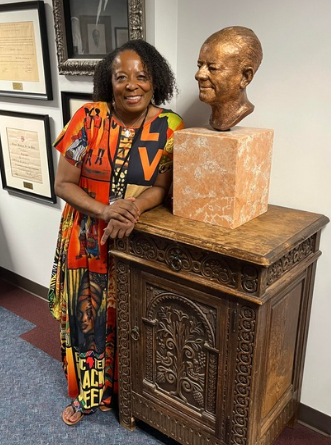
What is your leadership superpower? I think one of them is that it’s not about you. It’s not personal. And some people want to make it personal. You don’t have an allowance for it to be a personal type of thing. Somewhere we have to work it out because it isn’t a personal thing. That’s freeing energy.
I’m so glad to know that I am perceived in that way. And I actually agree with it and it’s so unconscious.
The one that comes to mind for me is a combination of listening with strategic thinking. I’ve worked hard over the years to listen to what people say and what they don’t, and use that information in the context of what the big picture is and where we are trying to go. That does backtrack to the idea that it's not personal. I’m listening for where we say we want to go and what we need to get there. It may not match what I would personally do, but, as a leader, it’s not personal.
Sheila: I’m going to toss another one at you. Tracy is never finished. It’s not that there’s something else. There’s something more. You get to the thing and it’s perfect and what we’re going to do and your brain is already thinking about, “And then what?” You’re not moving anyone into the “then what” but in your head you are constantly in the creator mode of “then what?” It’s the curiosity that you have.
“My life’s purpose is to build cross-cultural bridges and teach other people how to do the same.”
When you’re getting ready to go do that big bad tough thing, or the big fun great thing, what do you listen to, say or read to conquer the big stuff?
My life motto is you always have a choice. I chose that motto when I was 15 or 16 years old as part of a class assignment when we were asked, “If you were to create or choose a motto that you feel represents what’s most important to you or how you want to live your life.” I took the assignment seriously and the answer was you always have a choice.
The reasons I chose that then were relatively limited. I was a teenager. But every few years over my entire adult life I have revisited it and asked if it's time for a different motto. Every single time I still choose that.
When things are tough as a leader, I remember that I have a choice. I have a choice to be a victim. Is that what I want? I have a choice to tell people off and tell them what they are doing wrong. Is that what you want? I have a choice to walk away from this. Is that what I want? I hear in my head, I have a choice. It is not okay to go through life being a victim of what other people say, do or think. I get to choose who I want to engage with. How long I’m going to engage with a situation or scenario. You always have a choice.
Sheila: You’re masterful at taking the complex and making it simple. That’s a gift.
What do you know your life’s purpose to be?
My life’s purpose is to build cross-cultural bridges and teach other people how to do the same.
What talent do you have that you’re not using?
Writing. And even though I have published several books, I do not write enough or use my skill and talent of writing.
Sheila: Do you feel like you lose stuff? Do you speak into a recorder?
Sometimes, but not usually. I love to write whether typing or long-hand but either way I’m not writing enough. I’m laughing because at one time, my image of retirement was that I would publish a new book every year for the rest of my life and then give keynote speeches based on the book that came out.
What’s a talent that you wish you had?
I wish I had the talent of being comfortable with any person, any time. You know, some people say that they’ve never met a stranger. I’m such a deep introvert, it is challenging for me both with people I know, and those I don’t know. In large groups it can be hard for me to initiate conversations. I wish I had this because I’m around people a lot. I like learning from people and I’m fascinated by all types of people.
If this 5 years’ is a chapter of your life, what is it about?
This chapter that I’m in the early pages of, is about legacy. It is about leaving a legacy of leadership, that opens the door for young Black professionals to have amazing careers and where more people are boldly inclusive.
It’s a year from now, what are you celebrating?
I’m celebrating a new book that helps leaders be more inclusive.
Sheila: You have some content from this interview!
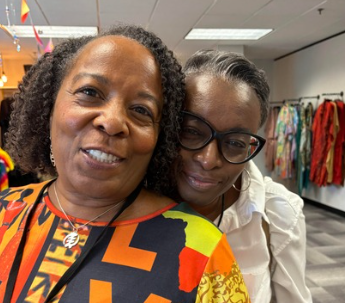
Tracy and me in Charleston, South Carolina, circa 2024.
Tracy, Is there anything that I have not asked that you’d like to share about you, leadership and how it expresses itself in the brilliance that is you?
I want to acknowledge how important this conversation, and conversations like this, are. Having a moment to reflect on where we have been and to anchor in on what has been good on this journey doesn’t happen often enough. I consider myself a really intentional leader, but I’m busy being a leader, doing leadership, without reflecting intentionally on what have been the lessons learned and how I use them going forward.
I want to acknowledge how valuable that is and how brilliant you are for initiating these conversations.
Sheila: Thank you, I learn so much! I learn about the thread of leadership, the fiber, that extends itself in so many ways and how it came to be. I learn a lot.
Tracy, thank you for being In the Cut with me!
Learn more about Tracy here and please leave a message for her below!