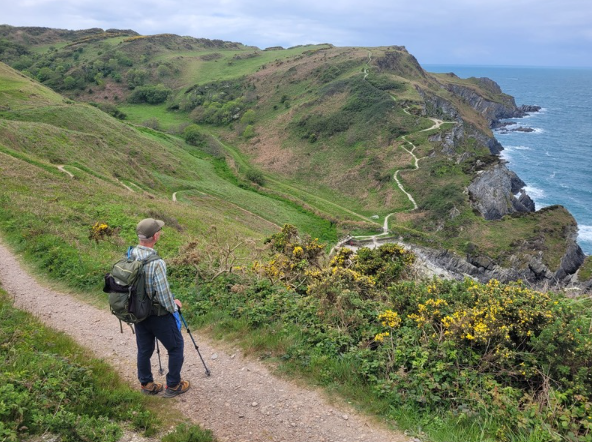
Dave Walker says he’s actively pursuing retirement but retirement isn’t actively pursuing him! Before the idea of taking a break came to Dave, he spent more than 30 years in international development in the public health and conservation sectors. Dedicated to building the scale and scope of development programs in more than 50 countries, he developed strategic plans, led multi-function social marketing teams, managed cost-efficient operations and guided research driving product and process innovation. And to think this all started when we sat in side-by-side cubicles dreaming up new products at Quaker Oats in Chicago, Illinois!
Sheila: Hey Walks, I’m glad you’re In the Cut with me. It feels somewhat familiar to our path as young people in corporate America! We’re gonna talk about stuff and whatever comes to mind, comes to mind.
I like to start these conversations with how we identify in this very complex intersected existence that we live in today. How do you describe that for yourself?
I don’t normally think in these terms which probably says something in and of itself. When I did give it some thought, 3 characteristics came up.
The first one surprised me. I identify as someone from the Midwest, and specifically from Michigan; even though I haven’t lived there since I went to graduate school.. I think the core values I have are the ones generated growing up in Kalamazoo, Michigan. Why I think that rises to the fore is that, as you know, I return every summer and for some reason the minute I cross the state line, I just feel good. Whatever metaphor you want to use – hand in a glove that fits well, or back on a bike that’s natural – it just feels good. I’ve lived in many places, internationally and domestically, and Michigan will always be a part of my core.
The second thing is the professional and life choices I’ve made that could be called conventionally unconventional, or unconventionally conventional, because initially I conformed to a “successful” path – MBA, corporate America – and then a synapse misfired and I went into the Peace Corps. That was very rare in my professional context at the time, and very rare from people where I grew up. Doing that led to a wonderful life and career in international development. I don’t think that would have happened if I would have just stuck with the tried-and-true path that I had in my mind originally.
The third thing, and it’s related to the unconventional bit, is that I’m going through a life transition right now. I’ve quit work and am very fortunate that I don’t have to work from a financial perspective, but I’m not willing to call it retirement. I’m approaching this period as an experiment. I didn’t know how I was going to react. Like many, a big part of my identity was my professional title and organization. To have that go away, along with the daily behavioral guardrails we have when we have work obligations, is both exciting and disconcerting at the same time.
I still don’t know what the future holds. I’m calling this re-wirement. That’s not my term, yet it seems to apply. And the experiment continues. So, my identity goes from my past to where I am now.
Sheila: I love Michigan and I’m from there, too, as you know. I don’t go back as frequently as you do but the fact that you harken to Midwest values is heartwarming. I recognize that as a truth about being raised in that part of the country. It does some good things and then some other things!
I also think about this time of your life – exciting and discerning – it continues on the path of unconventional conventional. A lot of people would call life good or go to something simpler. You’re literally stepping into the void of “I don’t know” and that’s reasonably unconventional and some might say risky, and you’re comfortable with that.
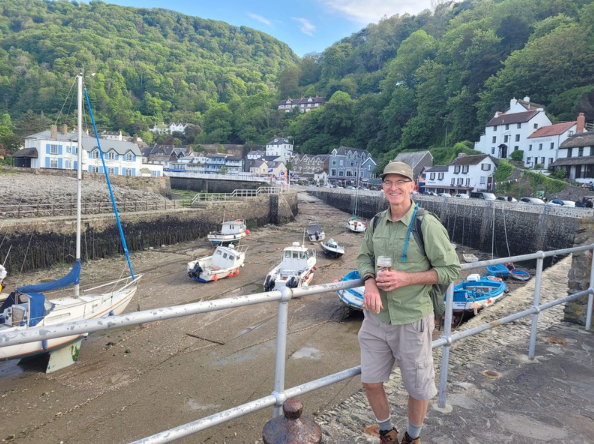
Yea, I am, at least for the last 2 years I have pursued things I hadn’t had time to do previously. To-date, that’s mostly being out in nature doing some sort of individualistic physical activity, which has provided a fair amount of psychic gratification. It’s the complete opposite of where I was before, leading organizations. It’s felt good. But I really thought I would be antsy by now.
Sheila: I’m so proud of you that you are not feeling antsy!
You said something about the work that you did, leading organizations. I knew you before you conquered the world. Somewhere in there you made the leap that led you to running a global organization. Talk with me about that leap.
The leap was going from corporate America to the Peace Corps, which was a bridge to a completely other world and culture that was alien to me professionally and personally. And then I went to work for a public health nonprofit organization operating in developing countries tackling major problems like HIV/AIDS, malaria, childhood diseases and reproductive health. It was a serendipitous but nice fit because I had to use my management and marketing skills that we developed at The Quaker Oats Company, but in completely foreign and new settings.
It was an organization that put its individuals first, having faith in them, vs. operating in a conforming bureaucracy. Our internal expression was, “We give people leash.” I was a country director and it was my show – good, bad or indifferent. Whether I was ready or not, you either make it work or you don’t.
There was more meaning in trying to do good, trying to improve people’s lives, rather than increasing shareholder equity of a corporation. I’m not belittling the corporate world because there is a lot of meaning in that, too. But for me this was an added thing. Any given day may have sucked, but I still worked toward something good and humanely worthwhile.
That’s where the transformation to leadership came. I stayed with that organization for 19 years and was the country director in Malawi and then Kenya. I then had a global marketing role;it was all very intrinsically rewarding.
Sheila: You said that maybe you were ready, and maybe you were not. Were you ready?
Partially. In hindsight I was ready because I had a good grounding in marketing and management practices from corporate America. But applying those in a completely foreign and resource poor setting put me on a very steep learning curve both professionally and personally. That actually led to a lot of my leadership style.
When you’re parachuted into a completely foreign culture, all the things we innately assume in the west or US about this is how people behave, this is how we act, you risk becoming a bull in a china shop. That’s not going to work in a lot of places internationally. It forced me to become more perceptive and patient than I would have been otherwise; where social norms and cultural cues are very different from what I grew up with and experienced during the early part of my career . That had a fundamental impact on how I led these organizations.
“There was more meaning in trying to do good, trying to improve people’s lives rather than increasing shareholder equity of a corporation.”
If you had to name a couple of things that you had to refine because of the different cultural experience, organizational construct and being in a different country, what would they be?
One thing was focusing on traditional marketing. The methodology we were applying was called social marketing. It was like consumer marketing in a nonprofit sense. If you think about running a nonprofit pharmaceutical company, it would be like that. .
It was a little bit like bringing western ideas of management and strategic marketing and applying it in a different country and thinking it will work swimmingly. And what we experienced were people in-country processing information differently.
When I went to Malawi, the country was emerging from an authoritarian regime - historically there was a great deal of respect for authority and hierarchy, which often included a lot of intimidation. When I walked down the hall, people would move aside and nearly pin themselves against the wall to get out of the big boss’s way. That was symbolic of the fear of hierarchy, which limited proactive individual initiative. I realized I had to help build the staff’s confidence and individual agency to override the milieu of authoritarianism.
I was responsible for leadership, financing and personnel and I wanted to make sure that I wasn’t taking and making all of the decisions because that’s what people in this culture expected. I learned to push back and take more time than I would have otherwise to give people the confidence to take over a project or to collaborate alongside them.
Sheila: That’s heavy-duty modeling that I don’t know we give the same attention in a US corporate setting. Like really embracing how we have to work to get things done. We don’t pay that much attention to it here because the focus is solely on getting it done.
How did you gain confidence over the 19 years to reach the point of knowing you had what it took to lead in this way?
I wouldn’t say that I ever felt 100% confident. I learned by doing. As careers go on it’s less about education and technical skills, and more about applying what you’ve learned experientially. Learning how to operate in a very low infrastructure and poorly resourced environment meant checking assumptions at the door about what can and cannot be done.
I had to travel a steep learning curve about the international donor world and their objectives, as well as understand a lot about public health, especially since I never studied that in school.Running an international development non-profit is very different from the U.S. domestic commercial for-profit world. Becoming comfortable with that over time without losing some of the positive traits from the commercial world that I thought could and should be injected into the nonprofit public health environment.
What would you say to a new leader from the U.S. heading into a global situation, as challenging as yours was in Africa? What would you say to them as they are figuring out leadership?
Listen. Be patient. Be humble. Part of everything you know and accomplished in a U.S. setting will apply; part of it will only partially apply; and part of it won’t apply at all.
What was your first “known to you” leadership moment?
This may illuminate how I describe leadership. What rose to my mind quickly was when I felt most vulnerable because it was a situation that only I could deal with.
One of my leaders was moonlighting in a consulting role that was a conflict of interest for the organization, and I felt that my trust had been betrayed. I had a hard decision to make and expressed to him how I was feeling and asked how he wanted to handle things before I spoke. He identified with my perspective, and developed the solution.
It may sound minor but it wasn’t. It came up for me here because all of the questions you’ve asked have been more cognitive and objective. But in this case, leadership was an emotive, trust and vulnerability thing.
Sheila: You just said a mouthful because that’s what leadership is. It’s doing the thing through humans and that informs an entirely different way of how you will ultimately get things done.
How has your identity informed your leadership style?
Part of it is my non-bombastic, non-Type A behavior. It’s “leading from behind” for me; I didn’t need to be the tip of the spear all the time. One thing that has stuck with me is remembering that knowledge workers want 3 things: a sense of autonomy, a sense of mastery, and a sense of purpose. This resonated with me.
I think my leadership style was about making sure that everyone was on the same page in terms of mission and purpose. It’s an advantage of working in a non-profit that has human oriented meaning – people will join for the meaning – and are usually attracted to the emotional purpose and organization’s values already.
Also, I understood that while the buck stopped with me, I didn’t want people doing things for me. I didn’t do things for my boss in my early career and I didn’t want people doing that for me. Rather do it for the objective at hand and the overall mission.
“The learning was that compromise can be a good thing.”
Is there anything else that comes to mind that you learned and will never do again? Or, will always do because it really worked out well?
In Kenya w created some condom TV advertising that we had thoroughly researched and pre-tested. Fifteen percent of adults were HIV+ at the time, and existing advertising for condoms was very dry and medically oriented. Our advertising put sex back into the storyline. It had to be approved by the Ministry of Health, which by nature took a conservative stance, and the meeting grew contentious. Even with all of our research justifying the appeal and impact of the campaign, they did not approve it as it was presented. However, we made some cosmetic edits without compromising the substance and impact of the ad that led to a win-win and got it aired.
The learning was that compromise can be a good thing and you can achieve the results you’re after even as you address opposing views.
What surprised you about leadership?
How much I enjoyed it. When I didn’t thrive, it came down to not having agency over what I was doing. It was lonely and scary at times because of the accountability, but it felt right, in spite of more than a few sleepless nights!
What’s your leadership superpower?
It stems from our marketing days and core lessons about separating symptoms from causes. My strength is being an organization’s “symphony conductor” – the job is having everyone literally and figurately on the same sheet. I don’t know how to play an oboe or cello or this instrument or that instrument, but I do know, based on what we are trying to achieve, whether accounting, finance or research - the instruments - are the important things that need focus in a given situation or time. Being able to take a broad view and narrow it down to what is needed in the moment and the foresight to see what’s coming next is a skill I developed. And not being overwhelmed by the magnitude of some of the challenges. Being able to simplify and prioritize things in ways that are strategic and managerially sound.
Sheila: The thing is that we don’t often think about the things we do and how we get stuff done. When we stop and actually think about it, there’s stuff that we’re just friggin’ good at that we don’t even think about. We just do it. So, to name it feels very foreign.
When I was in Kenya, I was in the right place at the right time. We grew to generate 1/10th of the revenue for the entire organization, which operated in about 60 countries at the time. We were managing really fast growth by holding on to the proverbial tail of the dragon. I soon learned that there were 3 areas – strategy, finances and personnel – that I needed to focus on. Anything else was ancillary or downstream to those. If I got that 3-legged stool right, everything else would turn out pretty well. That’s how I conceptualized it at the time.
Sheila: It’s interesting how many marketing people end up leading companies. You and I had the good fortune to start on products that required some strategic thinking. I found that learning to be foundational to me starting and running my own businesses. That foundation gave us touchpoints across everything that had to do with that product that a lot of people never get to see. If you really get it at the brand market level, you could be a CEO anywhere.
Rephrasing what you said, you can’t be a good marketer without starting broad and following a deductive path. I think that perspective and discipline is beneficial to most situations.
So, when you’re going into battle, is it Jimmy Buffet you’re bringing with you when you have those big and difficult decisions to make? It is a song? A poem?
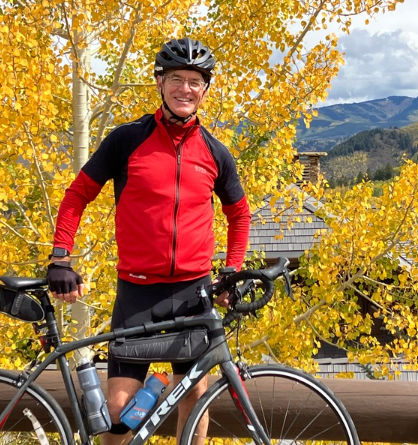
I need to buy time and space to gain a calm perspective. Normally I do that by getting out into nature and doing something physical beyond the wheels in my head going around faster.. That would be my mulling, non-emotional, non-stressful time.
I also have 2 quotes from Illusions: The Adventures of a Reluctant Messiah by Richard Bach who also wrote Jonathan Livingtson Seagull.
The first one is, Argue for your limitations, and sure enough they are yours.
Sheila: Wow.
The other one is something I don’t really always identify with, or understand, but it still resonates for some reason. You teach best what you most need to learn.
Those are the 2 that stuck with me. You should read this book, Sam (my nickname from way way back!). It will take you maybe 2 hours.
What’s your life’s purpose?
To be a decent bloke who tried hard when he needed to; and who treated people well more often than not.
“A year from now I want to be celebrating a new direction of useful service.”
Is there a talent you wish you had?
I wish I was artistic in any way! Artists break new ground and are inherently non-conformists.
You’re in a 5-year cycle of your life. What’s this chapter about?
Letting go plus new engagement. Discovery and appreciation. Moving toward meaningful contribution and aging with grace.
Sheila: What’s the option?
It’s a year from now, what are you celebrating?
Good health. Learning from new experiences. A new direction of useful service.
Sheila: Thank you, Walks.
You’re welcome, Sam.
Leave Dave a comment below!