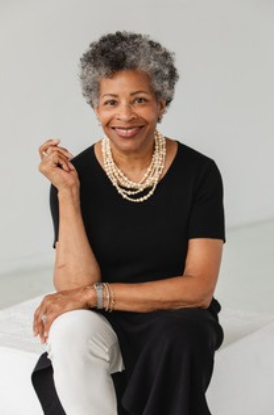
For more than 30 years, Susan Long-Walsh has studied not only how people experience work, but why the same workplace can inspire trust in some and frustration in others. She has viewed complex workplaces from multiple vantage points—as an employee, manager, recruiter, executive, founder, advisor, consultant, coach, board member and employee resource group chair. All positions provided a view of how leadership works for the good and not so good of the people impacted. She’s a woman who has had access and has the receipts that tell the story.
Sheila: To my ride-or die, Seattle partner Susan Long-Walsh, welcome to In the Cut.
Thank you, thank you. It’s an honor to be a part of In the Cut Conversations with you, Sheila.
Sheila: This is gonna be fun. Think of us sitting in the back in a club with a little music playing. We might have just ordered a drink and are just gonna chat for a little bit.
Your work has made its way to DEIJB in all of its important expressions. Not only in recruiting where you started, but in expressions of leadership, how people show up in community with one another. As we find ourselves in a very complex place as a country and around the world, how we identify informs so much of how we sit at the table. I’d love to know how you describe yourself on any given day.
I am a woman. I am Black. I am a Black woman and I’ve never been one without the other. And I am very proud of being a Black woman.
I am a mother, a wife of 48 years, and a first-time grandmother of almost 2 years which has been absolutely phenomenal. As the first, only and different – an FOD as Shaunda Rhimes coined it – in nearly every room I’ve entered, I’ve learned to carry my identity as both a source of strength and grounding.
Sheila: Hmmm, first, only, different.
Talk about grandmother for just a second. What do you think that the addition of grandmother to your identity has called from you?
It’s called “giggles”. And it’s called phenomenal joy. Joy was the word I selected last year. I don’t do new year’s resolutions; I just decide on a word that when I open my eyes in the morning and know that I have another day that I’ve been blessed to live in, and how am I going to live in it on these days especially, I’m going to live in joy. Having a grandson has added unbelievable amounts of joy to waking up to a new day. Sometimes when it feels like the sky is falling from all of the breaking news that I try to stay away from, I just pull up his picture!
Sheila: Joy and giggles. My family and friends who have been blessed with “grands” – there is something about that. There is a gentleness that gets expressed and unabashed pride, happiness and joy is what I hear.
“As humans we have the capability and ability to unpack our love.”
Absolutely. You don’t know what’s packed away. It came with having 3 kids and with each one there was an abundance of love that was the “L” after the “L” of labor. And it’s like “where has that been?” Then the next one comes and you ask, “where did that come from”. As humans we have the capability and ability to unpack our love. When there are barriers that get in our way, we have to seek the love. We have to find the people and surround ourselves with people who are only going to lift us higher.
Sheila: You are one of the people in my life who I can say that I understand clearly why she does the work that she does.
So, how do you describe the work that you do and why is it important to you.
In 3 words, Sheila - I humanize leadership.
Leadership is not a title. It’s about everyone, including the individual contributor. Whether I’m educating, coaching, or speaking, I help humans show up with integrity, courage, and emotional clarity. My work involves guiding people through discomfort so that they can lead authentically and build teams where everyone can thrive, not just survive.
I say, being the FOD, including kindergarten and all through college and into the workplace, that there were a lot of trap doors and I’m always looking for the trampoline. What I want to do, and have done, is bring other people onto the trampoline so we can continuously jump higher in what it is that we do and bring into the workplace, and life in general. And that is specifically for Black women because our stories are so much alike of what happens in and within the culture of work. And we all work! Oprah works!
So instead of wanting to know what you want to be when you grow up, the question should be, “how will you behave when you grow up?”
Sheila: The visual of the trampoline indicates rebound. Talk about rebound if that’s part of the idea of humanizing leadership because one could submit that it’s uncomfortable. When you hit that trampoline mat is the desire to stay down because it’s really hard. When you talk about trampoline and reaching higher, integrate that metaphor into your humanizing leadership practice.
“I’m not good at feeding the elephant in the room.”
It’s the ability, myself included, to learn to be more authentic and transparent. I’ve always been the truth teller and that can cause people discomfort. I read my audience and I’m not good at feeding the elephant in the room. I think for many years, I was the good Catholic girl and fed the elephant in the room. You know, communion wafers if that’s what they wanted!
Growing up, going to private Catholic schools in the 60s and coming from a home where one of my parents was a narcissist, I was never allowed to amplify my voice. So, the curiosity muscle never had an opportunity to come out like the love I mentioned earlier in our conversation. It was locked away because I was being the good girl.
But I realized after graduating from high school, I was working at Nordstrom and realized that if I didn’t start to ask questions and get curious with the customers, I was not going to find out what they wanted or needed, especially if they weren’t quite sure themselves. That’s where I really learned to start getting curious. And let me tell you it didn’t take long for me to become one of the number one sales people in the division I was worked in! I was curious and a truth teller.
Sheila: And you were a listener. You are a compassionate listener.
You know my spine is one of kindness and I have a thing about the underdog. When you’re on the trampoline of life and we’re jumping up and come back down, that rebound can be tough. Sometimes other people are jumping higher and getting the lift and you’re wondering why your shoes feel like stone. You are doing the same thing, and better, because the bar is higher and we know that going into these spaces. But somehow, it doesn’t feel as though the bounce in your trampoline has as much spring in it as the people around you.
I advised women to surround themselves with a board of directors who have the genius that they don’t. These are your ride-or-die folx, the ones you can tap into at any given time and there’s no judgement, only support. And pretty soon, the springs in your feet are lighter because those people have helped lift you. They have provided you with what you’ve had all along. You’ve just needed an extra voice to amplify your strength, beauty, and contribution.
Sheila: I almost think that your board of directors is underneath the trampoline pushing you up!
It’s so true and when you experience that it reminds you that there’s nothing like community. There is nothing like the community of sisterhood. We know how to do and be in the presence of each other.
I want to ask you about the work of humanizing leadership. You’ve been doing this in different spaces and places and today we find ourselves in the most challenging and complex social construct of our lifetime. We know that the civil rights movement is the cornerstone of this and now is the next thing that will manifest itself into another civil rights movement or we are doomed. Has the work of humanizing leadership become more difficult today or do you feel like people are getting it and understand that this is the way we have to go?
I think the answer to that question, Sheila, is a little of both. But before where we are today, I re-hung my shingle and the number one thing that I said I would not do was work with people who did not want to do the work. I was not going to work with organizations where the senior people were not getting into the arena. Because if your senior folx are not in the arena, I’m not going to check the box for them. I’m not going to bring the Black girl magic in because it sounds good for them to say this is what we are doing in our culture. Those behaviors are not aligned with what they say they want to do.
With my clients it has been a beautiful thing because the senior people are involved, and they want to do the work. But the challenge within is that there is more chaos and noise around us now that has added layers to how we go about guiding people through their discomfort. Back in the day, you’d go into the workplace and there were unwritten rules about what you left outside the door. You did not come in talking about religion, politics, or even what you did over the weekend. You came in, did your job, and left and when you left, you picked up whatever it was you parked outside the door.
We know so much more about each other as human beings now. And for the first time in history, we have 6 generations in the workplace. So, how do we start having conversations with each other when you’re concerned that someone’s hair is blue, has body piercings, or tattoos? How do we deal with these differences when you’ve never had a relationship with a grandparent and you bring in a bias because you’re working with someone “so” old and they don’t “get” it?
I learned how to type on a typewriter with a nun wearing a black habit and now people are on TikTok – I call it from typewriters to TikTok. There is so much unique diversity in the workforce where people look, live and love differently.
I am reminded that when I was in grade school I was, and remain, really competitive. I was shy l but still had a competitive drive. We had 2 huge playgrounds and one was for kickball with those big burgundy rubber balls. Whoever tagged up first and second were the captains and got to pick the teams. I lined up and another little girl tapped me on the shoulder said, “you’re not like who my parents said you would be. You’re not like the rest.”
I had no idea what she was talking about because I had to go tag up first or second so I could pick the winning team!
As I have evolved through life and realized a lot of the comments said to me – from the nuns, to the person tapping me on my shoulder, to my boss in the workplace – I have come to realize more and more, the meaning behind the comments. The gaslighting. The microaggressions – which I put micro in parenthesis – because there is nothing small about the aggressions toward another human. It’s a real interesting journey to have those truth-telling conversations with people who have brought me in who say they want to do this work.
It sounds like when you were tapped on the shoulder, it might have been one of those early moments of knowing about leadership. Think about when you recall your first “known to you” leadership moment and what sticks out about it?
The first thing that comes to mind has a dual meaning for me. I remember when I came back from family leave at a company where I was working, and the person who had just been promoted to be the head of the division I worked in called me into their office and said, “welcome back”, and introduced themselves and launched into a conversation that I had no idea was coming.
They said, “just so you know, management has been complaining about you.”
I said, “that’s interesting. I’ve been gone for months. What’s the complaint?”
They said, “you’re bringing too many Black people into the company. Everyone knows they don’t go into math and science. It’s obvious you’re lowering our bar because where could you be getting them from?”
For someone who didn’t ever amplify their voice and was just the good Catholic girl, without skipping a beat, I looked at that person and said, “we actually have to raise the bar as Black people coming into any organization because it’s people like you who think that when we eat a meal, we don’t use a fork.”
Sheila: That was your coronation. That was a “put on the big girl crown” and know that this is about me leading this organization through some change.
Absolutely, I could have been that good Catholic girl, stayed quiet, and played the game to vest because the “s” in “vest” was a dollar sign. I could have done that but I couldn’t look in the mirror. I knew that not everyone who went to kindergarten valued the golden rule as I did. My dad used to say the he knew who his kids were by the friends they have. And he was proud of us.
“My presence serves as both a mirror and window for others.”
You’re segueing nicely into the next question which is about how your identity informs your leadership style. How do you think this woman. Black. Black woman. Never one without the other shows up in how you lead?
My leadership is shaped by the tension of being visible, yet unseen. I call it excluded inclusion.
As a Black woman, I’ve cultivated both grace and grit and I lead with radical empathy and strategic clarity because I’ve experienced exclusion firsthand. My presence serves as both a mirror and window for others.
I remember sitting with an executive who wanted to be sure that his teams were inclusive of all people. I explained excluded inclusion and shared that the term that is near and dear to me is belonging, not inclusion
I shared that I’ve been included, particularly as the FOD. I’m on the baseball team and in the dugout and without fail, I never get to play. I don’t even have to wash my uniform. All of the players on my team are talking about their raises, bonuses, and their vacations and I am visible, yet unseen.
When we make it to the playoffs where there’s nothing like working and playing with competitive people. And one of the rules of the game is that everyone has to bat and I am the last one to do so. The bases are loaded and I know if I swing for the fences, hit everyone home, and I tag home plate, we will win the playoffs. And maybe then I will move from being visible to being seen. I know I have the skills and capability to not only aim for the fence but to hit it way beyond the fence. I do that and am thinking, finally, I’ll be seen to have the capabilities.
And when I reach the dugout, my teammates are looking at me like the sky fell. I’m trying to figure out what went wrong, we had just won the playoffs and my teammates say, “you didn’t tag all the bases.” Confused, I turn around and I see that there were additional bases. They didn’t want me to know the rules of the game.
Sheila: So, that leadership instinct of seeing everyone helps you to do what?
Work toward everyone feeling they belong. My grandmother had many saying that my kids call Gramisms. Two of her many Gramism were never judge a book by its cover and treat people with respect and dignity. This came from a woman who grew up in the South.
At one point when I was quilting with her, she shared that when she sent her sons to enlist into the military. She said she was sending them into war but it was safer than them being lynched in Alabama. I think about this often and wonder how you as a Black woman in Alabama can endure the things you were witnessed: a grandmother who was enslaved and whose parents who taught other enslaved people in an underground school to read because they were fair-skinned enough to have “good” jobs in the “house” and paid close attention when white children were being tutored and their only book was the Bible.
How do you go from experiencing that and 5 wars, the Great Depression, and more, yet and still, all the time your beliefs and behaviors are that God created all of us in His image and you love everyone. It was mind-boggling to me. I have to be honest; I don’t have faith as deep as hers.
Sheila: This is why we stand on their shoulders. They went deep in a different kind of way.
When you think of your leadership superpower – this magic that you’ve created – and the following you have, what is that?
I build trust quickly. I show up whole. People open up to me because I bring honesty, humor, and the courage to address the elephants in the room that allows us to get to the real work. I sometimes have to remind myself, because the confidence can be lacking, that I’m really good at what I do. And my husband tells me that all the time.
When I was recruiting, people called me the Oprah of recruiting because they couldn’t believe the things people would share with me. I call it story-sharing, not storytelling. When I did phone screens, I would give people up to 60 minutes. I didn’t want to know if they had the skills to do the job, because that’s for the hiring manager and their teams to discern. I wanted to find out who they were as humans. What made them tick? What ticks them off?
When you share your stories with people, you share who you are as a human. I wanted to understand how they would align with not only the overall culture, but all the subcultures created by managers. I wanted to set people up for success, not only fill a req, check a box, and move on. I was the person who made sure when you were hired, you had all the things you needed – Where’s the church? Where are the doctors? Where do you get your hair done? – because I recruited with retention in mind.
When you have the big things to move through, what’s the song, quote, prayer or poem that pumps you up?
Maya Angelou’s And Still I Rise. It has so many different meanings. It is a constant reminder that no matter what is said or done, I rise with dignity, defiance, love and kindness. It is a mantra that has sustained me through many challenges.
With all of this, you’ve shared nuggets in a lot of places – up the chain, as an entrepreneur independently leading people and organizations based on your reputation – what surprises you the most about leadership?
The common denominator of how a lot of leaders are insecure and afraid. They don’t want to be found out; they’ve achieved what they thought they wanted; and some are doing what they want. But they don’t know quite what to do with it and don’t want to say it! And they don’t know how to ask for help.
What do you know your life’s purpose to be?
Elevate silent voices. Leave things better than I found them. Bring others along so they don’t have to wait for decades to learn what I know and can share from what others have shared with me
Sheila: Does that in part come from not having mentors of your own?
Absolutely.
Sheila: Does this also come from seeing Black women, and your answer was not exclusive to Black women, but seeing us experience the same thing over and over and over again? Creating community – a safety net.
It’s critical for our physical and mental well-being. It’s critical for us to understand our worth and know that we are as good as we say we are!
Sheila: This is how I met you Susan and I’ve never heard you stray from your intentions, behavior, actions, and words around just that. I can say first-hand, that Susan is speaking her truth!
What talent you have that you’re not using?
I have been told that I should write a book and have started many times, with many different titles, and have finally gotten myself to a position where I am working on what I call companion guides. Like the soup for the soul books… desk references for women, and Black women specifically for when we are in situations where we wonder is it me? Is it something I did? Was it something I said? Should I have done something different? I thought this was what they meant. Things that we ask ourselves and always think we should have done better. Always placing the blame on ourselves.
I’m going to fully express myself through writing.
What talent do you wish you had?
That’s a great question. Swimming. When we were little kids, my parents made sure we had swimming lessons at the Meredith Mathews East Madison YMCA in my neighborhood. It’s still there. When I was in grade school, a classmate named Emer McGee was moving back to Ireland and there was a party for her. The boys thought it was funny to hold the girls underwater. I remember the fear of drowning. I’m someone who swam like a fish and am still afraid of water after going through that experience.
If this 5 years is a chapter in your life, what’s the title?
Reclaiming my voice and not trying to prove anything anymore.
It’s a year from now, what are you celebrating?
That I’ve helped more women of color feel seen, heard, and supported. My grandson. The tools I have developed are actually making places less harmful and more human. That my book has made its way into the hands of people who need it the most.
Anything you’d like to add?
Leadership isn’t about a title. It’s about how you show up.
Sheila: That’s why we have these conversations. To illuminate and highlight the good leaders.
Thank you for doing these, Sheila. I have enjoyed reading the other In the Cut conversations. I loved the one gentleman who said he was a childless cat man!
Sheila: Dr. Thane Kriener. And he is proudly just that.
Sheila: I appreciate you taking time. There is no mistaking the very heart-centered intention you have for the community of people who are lucky enough to be in your orbit. You are who you say your are and for that I will forever be grateful.
Drop a note to Susan below! I’m sure she’d love hearing from you.